
Blog
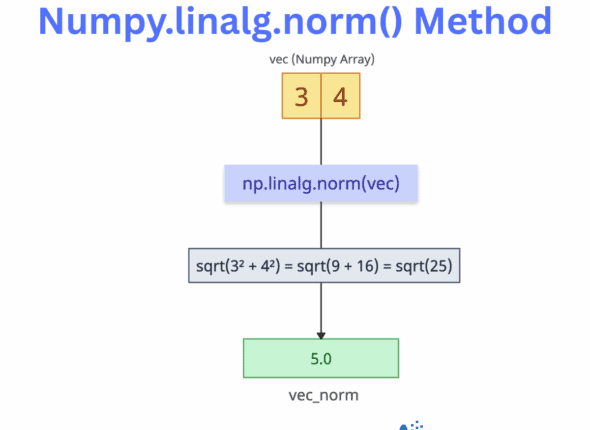
Numpy.linalg.norm(): Find a Matrix or Vector Norm
The numpy.linalg.norm() method calculates the matrix or vector norm of an input array. Norms quantify the “size” or “magnitude” of…

Numpy.isnan(): Tests NaN Values Element-wise
Numpy.isnan() is a universal function (ufunc) that performs an element-wise test to check if values in an input array or…

JavaScript Array forEach(): Looping Over an Array
JavaScript Array forEach() method iterates over array elements, in ascending index order, executing a provided callback function for each one.…

Pandas DataFrame reset_index() Method
The DataFrame reset_index() method in Pandas resets the index of a DataFrame, replacing it with the default integer index (starting…

Pandas DataFrame set_index(): Setting an Index Column
The set_index() method in Pandas sets one or more existing columns of a DataFrame as its index (row labels). It…
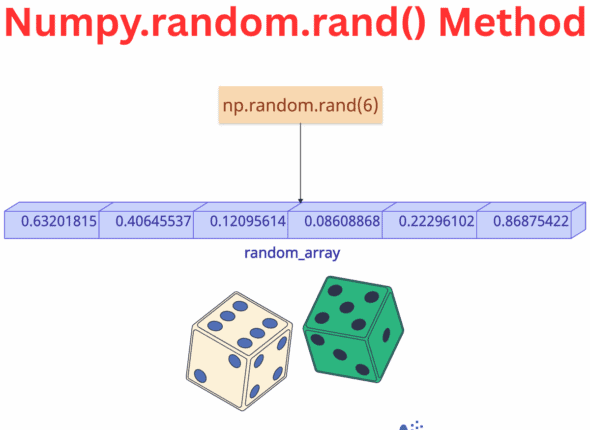
Numpy.random.rand(): Generating Random Numbers
Numpy.random.rand() method creates an array of specified shape filled with random samples drawn from a uniform distribution over the half-open…
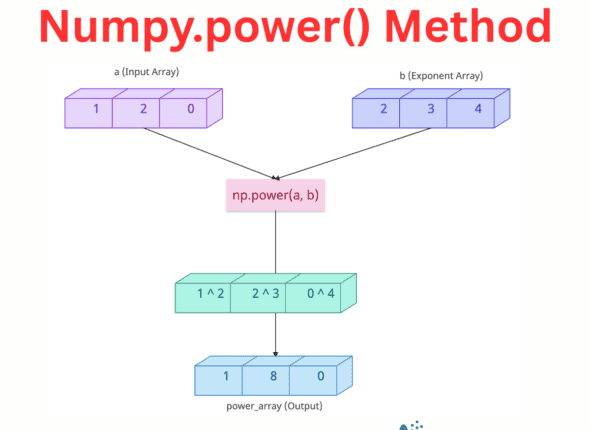
Numpy.power() Method in Python
Numpy.power() method calculates the exponential value of each element in the first array raised to the power of the corresponding…

Python statistics.median() Method: Calculating Middle Value
Python statistics.median() function calculates the median of the given dataset, which represents the middle value when the data is sorted…
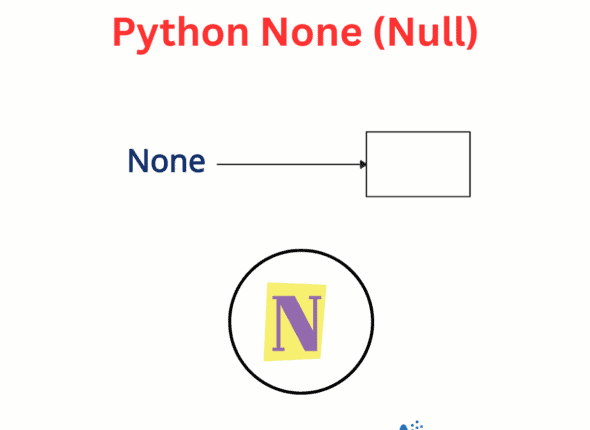
None (Null) in Python: What is it and Why is it useful?
There’s no null in Python; instead, there’s None. The Null is called None, a special object representing the absence of a value.…

JavaScript Object.values() Method
JavaScript Object.values() is a static method that returns an array of a given object’s own enumerable property values, in the…
