
Blog

How to a Read Binary File in Python
Reading a binary file is like reading a normal file using the open() function and changing the mode of the…

How to Pretty Print JSON in Python
Pretty-printing JSON means transforming a compact, often difficult-to-read JSON string into a readable format—an indented, human-friendly representation. Here are various…

How to Handle JSON NULL in Python
In JavaScript, null represents the absence of a value. It means nothing. The Python equivalent to null is None. When…
How to Create Temporary Files and Directories in Python
Python has a built-in module called “tempfile” that provides the .TemporaryFile() and .TemporaryNamedFile() methods that will create a temporary file…

How to Create Directory If It Does Not Exist in Python
The os.makedirs() function with the exist_ok=True argument is the most recommended way to create a directory if it does not exist…
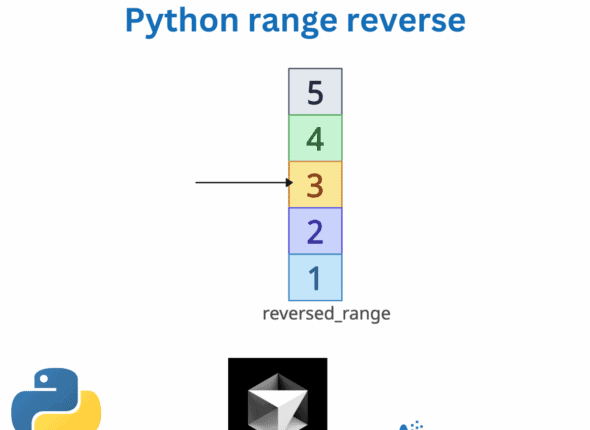
How to Reverse a Range in Python
The most efficient way to reverse a range object in Python is to use either the “slicing” or the “reversed()”…
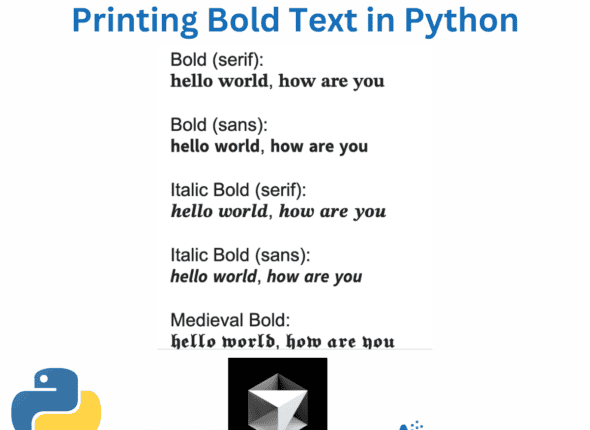
How to Print Bold Text in Python
For drawing the user’s attention to key information or highlighting important messages, bolding some words or phrases can breakup the…
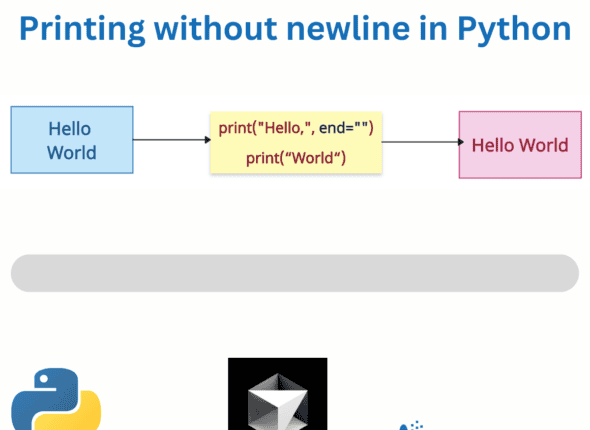
How to Print Without Newline in Python
The easiest way to print anything without adding a newline automatically is to set the “end” parameter of the print()…

How to Convert Int to Bytes and Bytes to Int in Python
Integers represent whole numbers with arbitrary precision. Bytes represent immutable sequences of single bytes (0 – 255), which you can…

How to Check If a Tuple Contains an Element in Python
To check if a tuple contains an element, use the membership “in” operator. It returns True if an element exists,…
